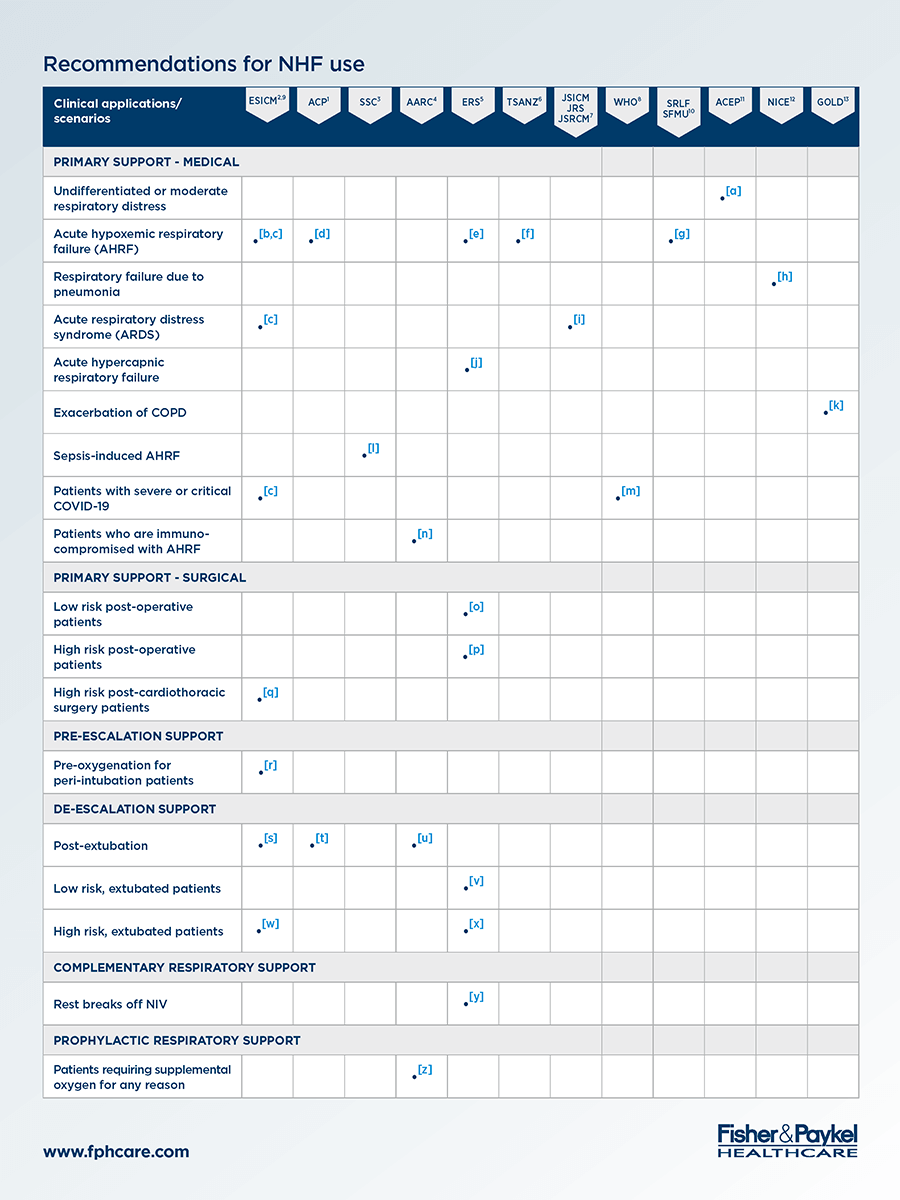
Acute hypoxemic respiratory failure (ESICM):NHF is preferred to conventional oxygen therapy (COT) for patients with hypoxemic respiratory failure. STRONG RECOMMENDATION https://pubmed.ncbi.nlm.nih.gov/33201321/
Peri-intubation (ESICM): NO RECOMMENDATION is made regarding the use of NHF in the peri-intubation period. NHF during intubation should be continued for patients who are already receiving NHF. CONTINUE NHF. https://pubmed.ncbi.nlm.nih.gov/33201321/
Post-extubation respiratory failure (ESICM): NIPPV is preferred to NHF in patients who would normally be extubated to NIPPV. CONDITIONAL RECOMMENDATION. https://pubmed.ncbi.nlm.nih.gov/33201321/
Post-operative (ESICM): NHF is preferred to COT in high risk and/or obese patients undergoing cardiac or thoracic surgery to prevent respiratory failure in the immediate postoperative period. CONDITIONAL RECOMMENDATION. https://pubmed.ncbi.nlm.nih.gov/33201321/
Acute hypoxemic respiratory failure (ERS): NHF is preferred to COT or NIV in patients with acute hypoxemic respiratory failure. CONDITIONAL RECOMMENDATION. https://pubmed.ncbi.nlm.nih.gov/34649974/
Acute hypercapnic respiratory failure (ERS): Trialling NIV prior to use of NHF in patients with COPD or acute hypercapnic respiratory failure. CONDITIONAL RECOMMENDATION. https://pubmed.ncbi.nlm.nih.gov/34649974/
Post‑extubation (ERS): HFNC over COT in non-surgical patients at low risk of extubation failure. CONDITIONAL RECOMMENDATION. https://pubmed.ncbi.nlm.nih.gov/34649974/
Post‑operative (ERS):Either NHF or COT can be used in post-operative patients at low risk of respiratory complications. CONDITIONAL RECOMMENDATION. https://pubmed.ncbi.nlm.nih.gov/34649974/
Breaks from NIV (ERS): NHF is preferred to COT during breaks from NIV in patients with acute hypoxemic respiratory. failure. CONDITIONAL RECOMMENDATION. https://pubmed.ncbi.nlm.nih.gov/34649974/
Recommendations regarding ventilation (SSC):NHF is preferred to NIV in patients with sepsis-induced hypoxemic respiratory failure. WEAK RECOMMENDATION. https://pubmed.ncbi.nlm.nih.gov/34599691/
Avoid escalation (AARC): NHF is preferred to COT to avoid escalation to NIV or IV in patients who require supplemental oxygen. RECOMMENDATION based on scientific experience. https://pubmed.ncbi.nlm.nih.gov/34728574/
Post‑extubation (AARC) NHF is preferred to COT immediately post-extubation in patients who require supplemental oxygen. RECOMMENDATION based on scientific experience. https://pubmed.ncbi.nlm.nih.gov/34728574/
Immunocompromised (AARC):Either NHF or COT may be used in patients who require supplemental oxygen. RECOMMENDATION based on scientific experience. https://pubmed.ncbi.nlm.nih.gov/34728574/
General recommendations for the delivery of supplemental oxygen for patients who require oxygen (AARC). Aim for SpO2 range of 94–98% for most of hospitalized patients (included critically ill patients) ---- Aim for 88–92% for patients with COPD ---- Aim for 88–95% for patients with ARDS ---- Consider early initiation of NHF. RECOMMENDATION based on the collective experience. https://pubmed.ncbi.nlm.nih.gov/34728574/
Post‑operative (ERS): Either NHF or NIV can be used in postoperative patients at high risk of respiratory complications. CONDITIONAL RECOMMENDATION.https://pubmed.ncbi.nlm.nih.gov/34649974/
Post-extubation respiratory failure (ESICM): NIPPV is preferred to NHF in patients who would normally be extubated to NIPPV. CONDITIONAL RECOMMENDATION. https://pubmed.ncbi.nlm.nih.gov/33201321/
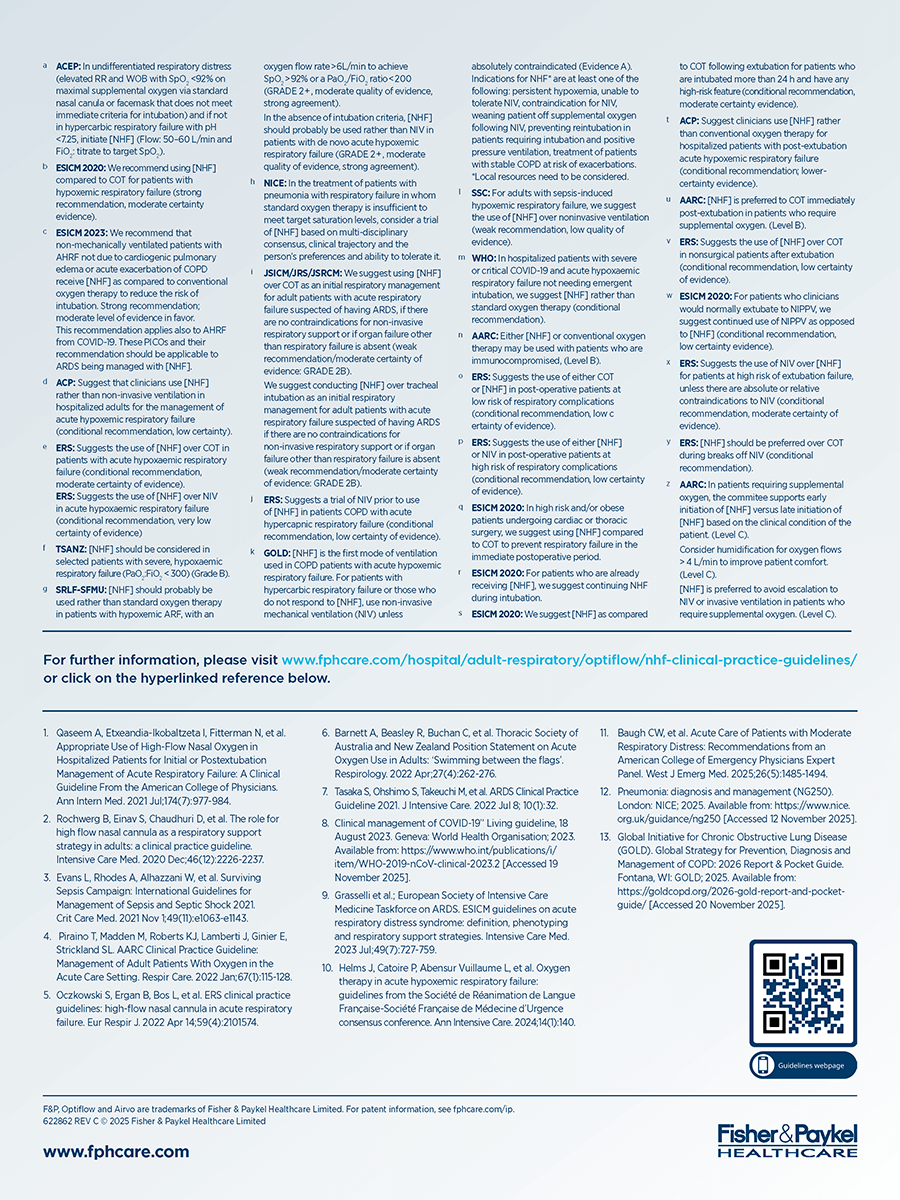
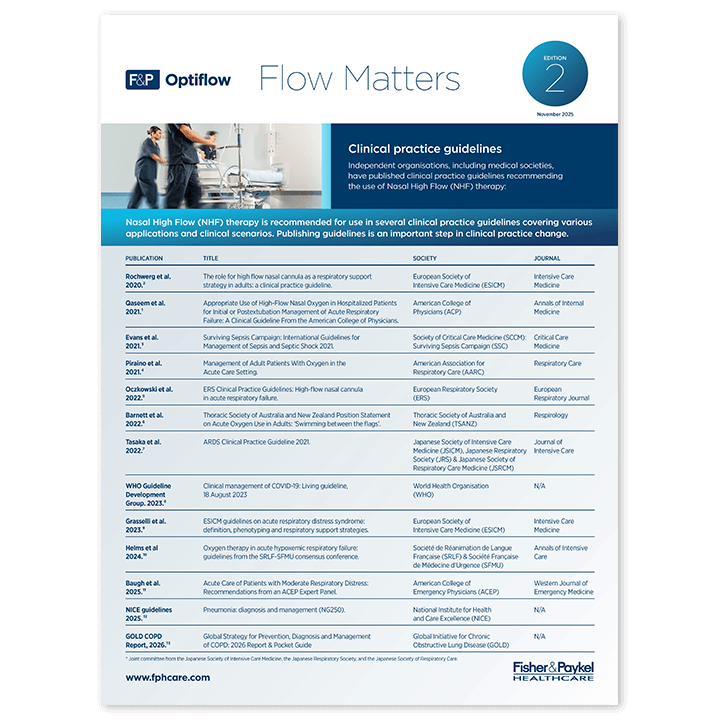
ESICM: Rochwerg et al. The role for high flow nasal cannula as a respiratory support strategy in adults: a clinical practice guideline. Intensive Care Med. 2020 Dec;46(12):2226-2237. doi: 10.1007/s00134-020-06312-y. Epub 2020 Nov 17. PMID: 33201321; PMCID: PMC7670292. https://pubmed.ncbi.nlm.nih.gov/33201321/
Oczkowski et al. ERS clinical practice guidelines: high-flow nasal cannula in acute respiratory failure. Eur Respir J. 2022 Apr 14;59(4):2101574. doi: 10.1183/13993003.01574-2021. PMID: 34649974.https://pubmed.ncbi.nlm.nih.gov/34649974/
Evans et al. Surviving sepsis campaign: international guidelines for management of sepsis and septic shock 2021. Intensive Care Med. 2021 Nov;47(11):1181-1247. doi: 10.1007/s00134-021-06506-y. Epub 2021 Oct 2. PMID: 34599691; PMCID: PMC8486643. https://pubmed.ncbi.nlm.nih.gov/34599691/
AARC: Piraino et al. Management of Adult Patients With Oxygen in the Acute Care Setting. Respir Care. 2021 Nov 2:respcare.09294. doi: 10.4187/respcare.09294. Epub ahead of print. PMID: 34728574. https://pubmed.ncbi.nlm.nih.gov/34728574/
Qaseem et al. Appropriate Use of High-Flow Nasal Oxygen in Hospitalized Patients for Initial or Postextubation Management of Acute Respiratory Failure: A Clinical Guideline From the American College of Physicians. Ann Intern Med. 2021 Jul;174(7):977-984. doi: 10.7326/M20-7533. Epub 2021 Apr 27. PMID: 33900796. https://pubmed.ncbi.nlm.nih.gov/33900796/https://pubmed.ncbi.nlm.nih.gov/33900796/
Barnett et al. Thoracic Society of Australia and New Zealand Position Statement on Acute Oxygen Use in Adults: 'Swimming between the flags'. Respirology. 2022 Apr;27(4):262-276. doi: 10.1111/resp.14218. Epub 2022 Feb 17. PMID: 35178831. https://pubmed.ncbi.nlm.nih.gov/35178831/
Post-extubation respiratory failure (ESICM):NHF is preferred to COT following extubation in patients with any high-risk feature who were intubated for >24 hours. . CONDITIONAL RECOMMENDATION. https://pubmed.ncbi.nlm.nih.gov/33201321/
Avoid escalation (AARC) NHF is preferred to COT to avoid escalation to NIV or IV in patients who require supplemental oxygen. RECOMMENDATION based on scientific experience. https://pubmed.ncbi.nlm.nih.gov/34728574/
Tasaka et al. ARDS Clinical Practice Guideline 2021 committee from the Japanese Society of Intensive Care Medicine, the Japanese Respiratory Society, and the Japanese Society of Respiratory Care Medicine. ARDS Clinical Practice Guideline 2021. J Intensive Care. 2022 Jul 8;10(1):32. doi: 10.1186/s40560-022-00615-6. PMID: 35799288; PMCID: PMC9263056. https://pubmed.ncbi.nlm.nih.gov/35799288/
ARDS (Joint committee of 3 Japanese societies) We suggest conducting non-invasive respiratory support (NPPV, HFNC) instead of conventional oxygen therapy as an initial respiratory management for adult patients with acute respiratory failure suspected of having ARDS if there are no contraindications for non-invasive respiratory support or if organ failure other than respiratory failure is absent. NPPV (weak recommendation/moderate certainty of evidence: GRADE 2B). HFNC (weak recommendation/moderate certainty of evidence: GRADE 2B).Recommendation (CQ 16) https://pubmed.ncbi.nlm.nih.gov/35799288/
Post‑extubation (ERS): NIV is preferred to NHF in non-surgical patients at high risk of extubation failure, unless NIV is contra-indicated. CONDITIONAL RECOMMENDATION. https://pubmed.ncbi.nlm.nih.gov/34649974/
Prior to ETT(Joint committee of 3 Japanese societies) (CQ 18) We suggest conducting HFNC over tracheal intubation as an initial respiratory management for adult patients with acute respiratory failure suspected of having ARDS if there are no contraindications for non-invasive respiratory support or if organ failure other than respiratory failure is absent (weak recommendation/moderate certainty of evidence: GRADE 2B).https://pubmed.ncbi.nlm.nih.gov/35799288/`
Hospitalized patients with severe or critical COVID-19 and acute hypoxaemic respiratory failure (WHO): use [NHF] rather than standard oxygen therapy. CONDITIONAL RECOMMENDATION. https://www.who.int/publications/i/item/WHO-2019-nCoV-clinical-2022-1